
Apple CarPlay is, by most measures, the best in-car phone integration system available. The interface is clean, the performance is reliable, and for iPhone users who spend significant time behind the wheel, it has become as essential as the car itself. But CarPlay is also, by design, a closed system — and in a car context, that closure has consequences that become more apparent the more a driver depends on it.
There are no third-party streaming applications. Offline navigation is limited in ways that matter on long drives through areas with poor signal. Siri’s ability to handle complex, multi-step requests in a vehicle context trails what Google Assistant manages on Android. CarPlay does what Apple allows it to do, and for most journeys that is enough.
For an increasing number of iPhone users, however, it is not quite all they want. In 2026, the hardware category filling that gap is the automotive AI box — and the fact that it runs Android is, counterintuitively, exactly what makes it useful to iPhone users.
The Carlinkit AI Box connects to a vehicle’s existing factory head unit through the USB or HDMI port and installs a full Android operating system on top of the car’s native system. This does not replace CarPlay. The two environments coexist on the same screen, and the driver switches between them with a single tap.
What the Android layer adds is access to Google Play — and through it, every application that CarPlay’s walled garden does not support. Waze with its full feature set. YouTube and Netflix for parked use. Spotify’s full interface rather than the stripped-back CarPlay version.
Google Assistant handling voice commands with a breadth that Siri in a vehicle context does not currently match. The AI box does not ask iPhone users to abandon their ecosystem. It asks them to consider what that ecosystem cannot do in a car, and adds the layer that addresses it.
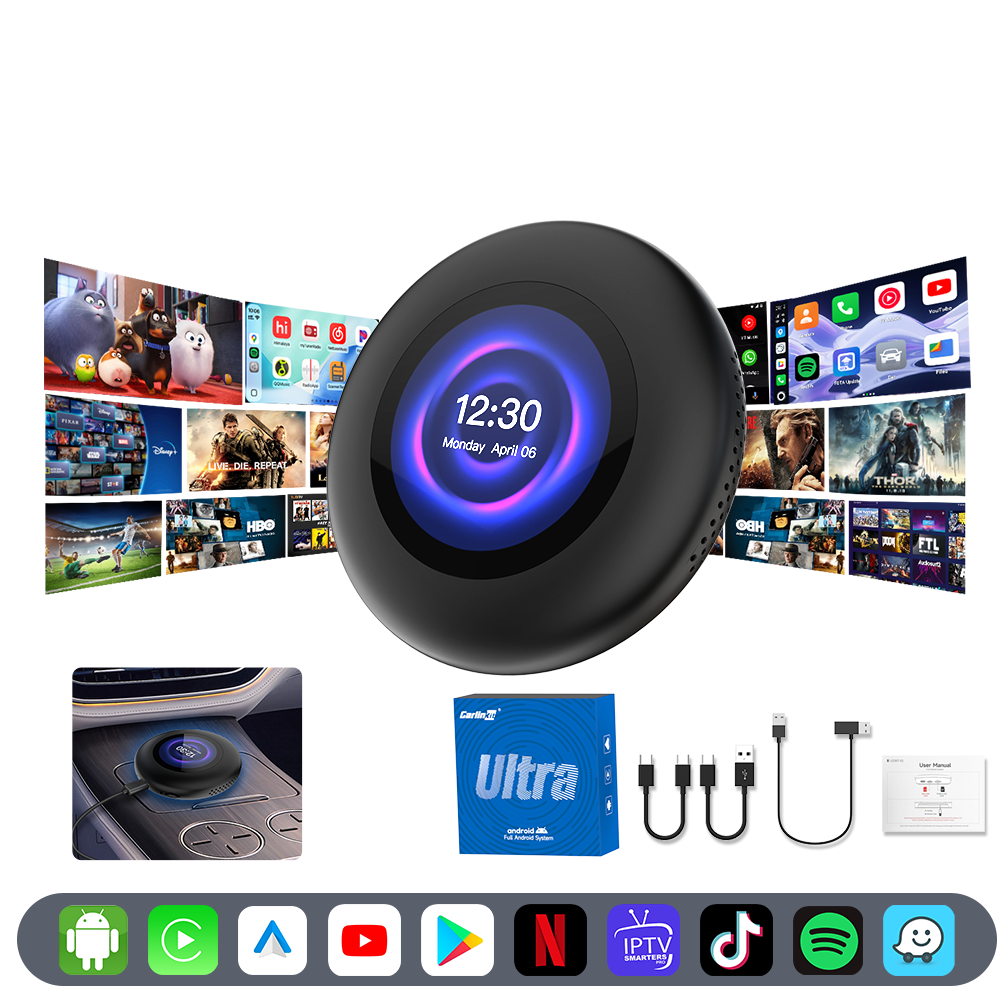
The installation process is designed to require no professional assistance and no modification to the vehicle’s electrical system.
The device pairs with the factory head unit on first use and operates through the existing touchscreen, steering wheel controls, and microphone — meaning the car’s native feel is preserved while its capabilities expand.
For iPhone users who have been reluctant to explore this category because of assumptions about complexity, the actual setup experience tends to resolve that concern within the first ten minutes.
The Specific CarPlay Limitations the AI Box Addresses
Understanding why this hardware appeals to iPhone users requires being specific about what CarPlay does not do, rather than simply what the AI box adds.
Streaming video is the most discussed limitation. CarPlay does not support YouTube, Netflix, Disney+, or any video streaming application — a restriction that matters for drivers who spend time in parked vehicles, waiting at locations, or travelling with passengers who use the rear-seat view from the front screen. The Android layer on the AI box has no such restriction. Any streaming service available on the Google Play Store runs on the factory screen without modification.
Navigation flexibility is the second significant gap. Apple Maps and Google Maps both run on CarPlay, but offline map functionality — critical for drivers in areas with unreliable mobile data — is handled more robustly through the Android versions of those applications. Waze, which many drivers prefer for real-time traffic handling, also delivers a fuller feature set through its native Android interface than through its CarPlay version.
Voice assistant capability in a vehicle context is the third area where the Android layer provides meaningful expansion. Google Assistant’s ability to handle multi-step requests, manage smart home integrations, and process natural language queries with contextual awareness gives it a practical edge over Siri for drivers who rely heavily on voice control to stay hands-free.
How Australian iPhone Users Access It
For drivers based in Australia, official Carlinkit Australia provides a dedicated platform stocked and shipped from within the country, with warranty support handled locally and compatibility verified specifically for the vehicle configurations common in the Australian market. This matters for a product category where compatibility by make, model, year, and trim level determines whether the device performs as expected — and where the consequences of an incompatible purchase are more frustrating to resolve when the seller is operating from the other side of the world.
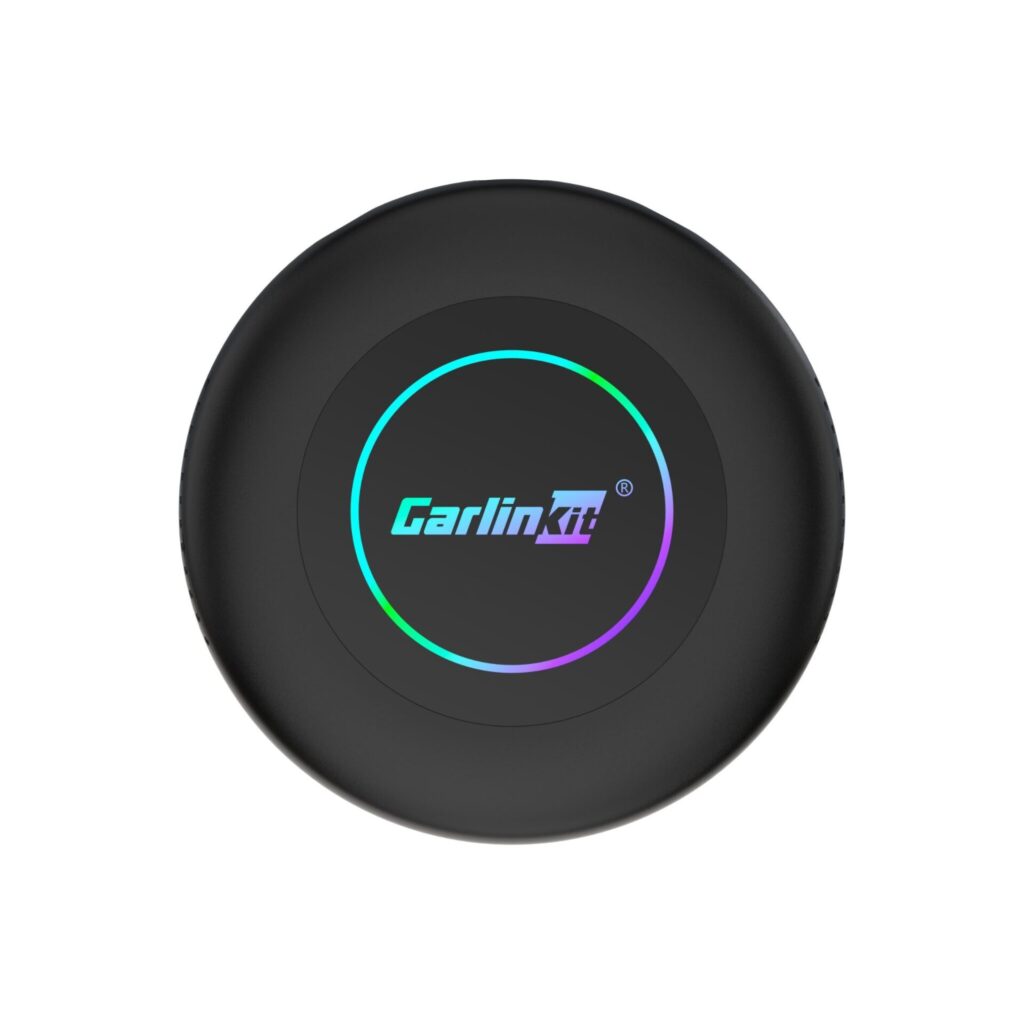
The Australian platform covers the vehicle makes that dominate the local market — Toyota, Mazda, Mitsubishi, Subaru, Hyundai, Kia, Ford, and Volkswagen among them — and confirms compatibility at the specific head unit level rather than by brand alone. Delivery to Australian addresses is fast, EU and Australian consumer protection principles apply, and support operates within the same time zone as the buyer. For Australian iPhone users who have been exploring this product category through international listings and hesitating over the unknowns, the local platform removes the variables that make that hesitation reasonable.
Australia’s geographic conditions also make the navigation flexibility argument particularly strong. Long drives through regional areas with intermittent mobile coverage are a routine part of life for a significant portion of the population, and the offline navigation capabilities available through the Android layer address a real, recurring need that CarPlay’s current feature set does not fully serve.
What to Verify Before Purchasing
The AI box market has expanded quickly enough that specification differences between products are significant and worth understanding before committing to a purchase.
Processor and memory configuration determines the fluency of the dual-environment experience. A unit running a quad-core or octa-core processor with a minimum of four gigabytes of RAM handles simultaneous CarPlay and Android operation without the lag that undermines the case for the upgrade. For iPhone users accustomed to Apple’s performance standards, a sluggish Android layer would be counterproductive — processor specification should be confirmed before price is considered.
Wireless standards affect the stability of both the CarPlay connection and the Android layer’s internet access. Devices supporting 5GHz Wi-Fi and Bluetooth 5.0 deliver the connection quality needed for uninterrupted streaming and navigation in urban environments where 2.4GHz congestion is highest. This is not a specification to compromise on for daily use.
Seamless switching behaviour between the CarPlay and Android environments is a feature that varies between products. The ideal implementation allows the driver to move between the two with a single tap, with both environments retaining their state — meaning a navigation route in progress on the Android layer does not reset when the driver checks a CarPlay notification. Confirming this behaviour in product documentation or reviews before purchasing avoids the most common disappointment in this category.
OTA update support signals ongoing manufacturer investment. The Android automotive environment evolves continuously, and devices that receive regular firmware updates maintain compatibility and performance over time in a way that discontinued firmware cannot. An update history published by the manufacturer is the clearest indicator of that commitment.
Two Ecosystems, One Car, One Upgrade
The framing of CarPlay and Android as competing systems misses what the AI box category actually offers to iPhone users. CarPlay remains the primary interface for the majority of journeys — it handles the iPhone natively, it is fast, and it is deeply integrated with iOS in ways that matter for daily use. What the Android layer adds is the capability set that CarPlay does not expose, available on demand without requiring the driver to choose between ecosystems.
For iPhone users who have reached the ceiling of what CarPlay provides and assumed that the next step was a new vehicle with a more capable factory system, the AI box reframes that assumption. The car’s screen already exists. The factory controls already work. The only missing element is a layer of computing hardware that makes the rest of what a modern in-car experience can include available on top of what is already there.
That layer, in 2026, fits in a device not much larger than a matchbox.
More iDevice Central Guides
- iOS 17 Jailbreak RELEASED! How to Jailbreak iOS 17 with PaleRa1n
- How to Jailbreak iOS 18.0 – iOS 18.2.1 / iOS 18.3 With Tweaks
- Download iRemovalRa1n Jailbreak (CheckRa1n for Windows)
- Dopamine Jailbreak (Fugu15 Max) Release Is Coming Soon for iOS 15.0 – 15.4.1 A12+
- Cowabunga Lite For iOS 16.2 – 16.4 Released in Beta! Install Tweaks and Themes Without Jailbreak
- Fugu15 Max Jailbreak: All Confirmed Working Rootless Tweaks List
- iOS 14.0 – 16.1.2 – All MacDirtyCow Tools IPAs
- iOS Jailbreak Tools for All iOS Versions


