
Tech enthusiasts spend a lot of time optimizing the devices they carry in their pockets. Screen-on time, battery cycles, storage usage, background app refresh — the data is always there, always being monitored, and the moment something falls outside of expectations, there is an alert.
The same mindset that makes someone good at managing an iPhone is exactly the mindset that makes car upgrades worth paying attention to — because the gap between what a factory vehicle provides and what an upgraded one can do is, in many ways, larger than the gap between a stock iPhone and a customized one.
Cars have always rewarded the people willing to look past the surface level and ask what the hardware is actually capable of when the artificial constraints are removed.
The car sitting in the driveway is running on systems that were designed years before it left the factory floor, calibrated for average conditions and average users in a regulatory environment that prioritizes liability over performance.
For anyone who has spent time thinking about what their devices are actually doing under the hood, the idea that tires are just “checked when they look flat” is roughly equivalent to never looking at battery health until the phone dies in the middle of the day. Aftermarket TPMS sensors bring the same data-visibility that iPhone users already expect from their devices — placing a sensor on every valve stem and transmitting live pressure and temperature readings to a dashboard display, with configurable alerts that fire when conditions deviate from the correct range rather than after a tire has been running critically underinflated for 30 miles.
The difference between a binary warning light and a live PSI readout for every tire position is the same difference between a notification that says “storage is low” and an app that shows exactly which files are consuming space and why.
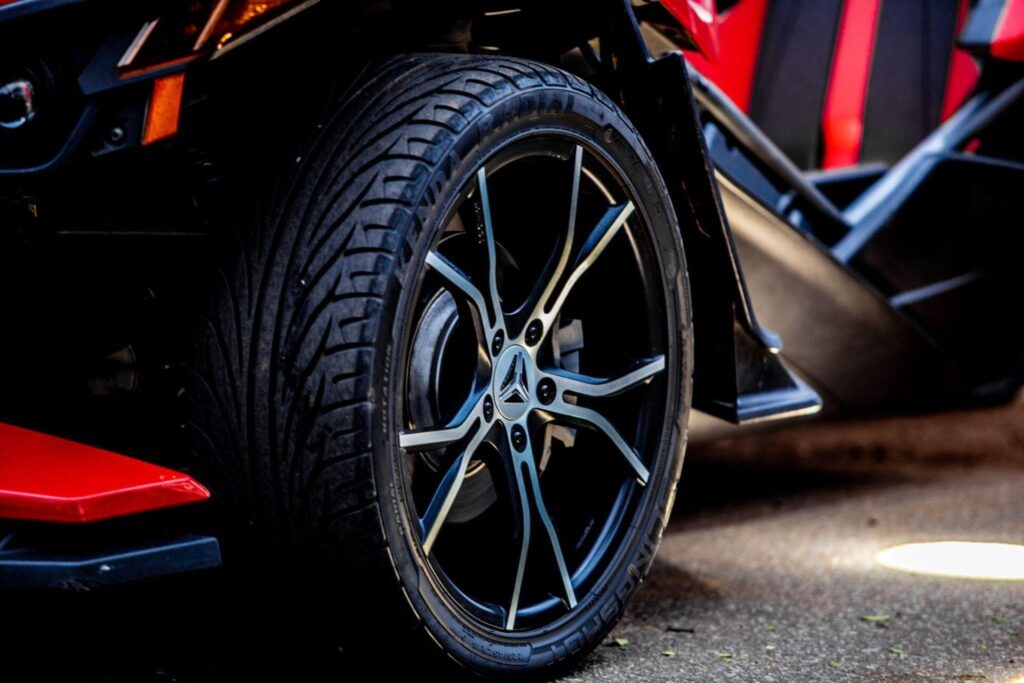
The factory TPMS warning light in most vehicles is the automotive equivalent of a low battery warning that only triggers at 5% — technically functional, practically too late. A direct aftermarket system replaces that single alert with individual pressure and temperature readings for every monitored position, updated continuously throughout the drive. Pressure changes with temperature, load, and altitude in ways that a pre-departure gauge check taken hours earlier cannot account for.
A tire that was correctly inflated at 7am may be operating at significantly elevated pressure by mid-afternoon on a highway in summer heat, or may have lost 4 PSI overnight at a campsite where temperatures dropped 30 degrees. Neither of those scenarios shows up on a factory warning light until the situation has already moved past the point where early action would have been simple. For anyone already comfortable reading device metrics and acting on data before something fails, the upgrade to real-time tire monitoring is an obvious step.
Beyond tires, the same logic of precision and control applies across every system under the hood. Factory components are calibrated for average users, average conditions, and regulatory minimums — not for drivers who actually want to know what their vehicle is doing or who want it to perform closer to its actual potential.
Whether it is a blow-off valve that handles turbo pressure correctly under hard driving, a cold air intake that gives the engine access to denser and cooler air, or an exhaust system designed around flow efficiency rather than noise regulations, the category of top-rated auto parts for performance cars covers exactly the gap between what a stock vehicle delivers and what it is actually capable of with the right components installed.
Just as a jailbroken or heavily customized iPhone reveals capabilities that Apple never surfaced in the stock interface, a vehicle fitted with quality aftermarket components operates in a way that the factory configuration was never intended to allow.

For a turbocharged daily driver, an aftermarket blow-off valve improves throttle response and reduces compressor surge during hard gear changes — the kind of difference that is immediately noticeable in real driving rather than only showing up on a dyno graph. When the throttle closes suddenly at high boost, a properly rated blow-off valve vents that pressure cleanly instead of forcing it back through the compressor. Over thousands of gear changes, the difference in turbo longevity and consistent boost response is significant.
A cold air intake compounds this by giving the engine access to denser, cooler air than the heat-soaked intake path the factory designed — improving combustion efficiency and producing measurable gains in throttle response that the stock system simply cannot replicate. Performance exhaust components reduce backpressure through the system, improving exhaust scavenging and allowing the engine to breathe more freely under sustained load.
Each of these modifications is the automotive equivalent of removing a software restriction that was never there for the driver’s benefit in the first place.
The underlying principle connecting tire monitoring to performance components is consistency — the same value that makes someone a good device manager also makes them a better vehicle owner. Accurate data about what the vehicle is actually doing, combined with components that perform to a known standard rather than a factory minimum, produces an experience that is both safer and more capable than the out-of-the-box configuration.
For tech-oriented drivers who already expect their iPhone to give them visibility into every meaningful metric and the ability to customize every system that matters to them, applying the same expectation to the vehicle in the driveway is not a stretch.
It is simply extending the same standard to a different category of hardware — one that happens to operate at significantly higher speeds, with significantly higher stakes, and with significantly more room for improvement than most manufacturers want their customers to realize.
More iDevice Central Guides
- iOS 17 Jailbreak RELEASED! How to Jailbreak iOS 17 with PaleRa1n
- How to Jailbreak iOS 18.0 – iOS 18.2.1 / iOS 18.3 With Tweaks
- Download iRemovalRa1n Jailbreak (CheckRa1n for Windows)
- Dopamine Jailbreak (Fugu15 Max) Release Is Coming Soon for iOS 15.0 – 15.4.1 A12+
- Cowabunga Lite For iOS 16.2 – 16.4 Released in Beta! Install Tweaks and Themes Without Jailbreak
- Fugu15 Max Jailbreak: All Confirmed Working Rootless Tweaks List
- iOS 14.0 – 16.1.2 – All MacDirtyCow Tools IPAs
- iOS Jailbreak Tools for All iOS Versions


